Read October 2009.
Photo courtesy Wikipedia.
The Scoop: Thriller novel by Lionel Shriver (US). Published by UK-based Serpent's Tail, first in 2003. Won the 2005 Orange Prize, UK-based prize awarded to female authors of any nationality writing in English. BBC Films acquired film adaptation rights to the story in 2005, but a series of issues and delays has plagued the adaptation. Script appeared on 2008 Brit List, a ranking of the best unproduced screenplays in British film compiled by the film industry. Currently, the film is scheduled to be filmed in 2010, with Steven Soderbergh named as one of the executive producers and actress Tilda Swinton signed on to star.
The Ingredients: In the form of letters written in first-person by Eva Khatchadourian addressed to her husband. Through the letters, Eva attempts to come to terms with her son Kevin and the murders he committed during a (fictional) school massacre. She talks about present events while delving back into their history to try and figure out what happened and what led Kevin to his depraved act.
Serves: Mature readers. Detailed recounts and descriptions of very disturbing and scary acts and events, violence, strong language, sexual innuendo.
November 8, 2000: Dear Franklin, I'm unsure why one trifling incident this afternoon has moved me to write to you.
Result: Absolutely breathtaking. I first heard of this title when I stumbled across a list/article of ten disturbing must-read books or something like that. I wrote down all the titles, but this one in particular jumped off the page for me because I've always found the sort of 'inside the killer's mind' type of thing fascinating and wanted a look for myself. And this book really delivers. Shriver is a stellar storyteller and writer, and her awesome vocabulary is a bonus. I couldn't put this book down, and when I had to, I'd be chilled to the bone and I couldn't stop thinking about what I'd read up to that point and speculating about what would come next. It stirs up incredible emotion and is so intricate that it is easy to forget that this particular story is (thankfully) fiction, though unfortunately, not entirely invented. It is an incredible exploration into the nature vs. nurture debate, though don't expect any clear-cut answers. [5/5 Fantastic writing, gripping story, thought-provoking detail, complex and real characters, strong emotion. This book will definitely leave a lasting impression on you, but be prepared, it may be easy-to-read because it is well-written, but it is not, by any measure, an easy read.]
November 4, 2009
November 2, 2009
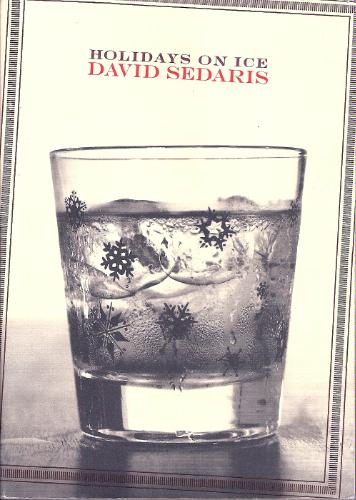
Holidays On Ice
Photo courtesy Amazon.
The Scoop: A collection of short stories and personal essays by David Sedaris (US), published in 1997 by Little, Brown and Company.
The Ingredients: The collection included previously published stories/essays (the first 2 I recognized from Barrel Fever - "SantaLand Diaries" and "Season's Greetings to Our Friends and Family!!!") and some new ones. All are based around the holiday season, as the title suggests. "Season's Greetings..." is a short story in the form of a Christmas letter that strays far from the norm, as Mrs. Dunbar, writing on behalf of the family, is forced to deal with some unsavory circumstances, but still tries to maintain a cheerful festive tone. "Dinah, the Christmas Whore" is a recounting of the night Sedaris (and the rest of his family) discover a new meaning to "ho, ho, ho". "Front Row Center with Thaddeus Bristol" is an honest review of the local school's Christmas plays/pageants. A man who works in the TV industry gives a sermon pleading the congregation for help in an ultimate heartwarming story in "Based on a True Story". Holidays on Ice ends with "Christmas Means Giving", a story that spirals into the most extreme showdown of generosity.
Serves: Adult, maybe even down to highschool-er age - there's nothing that I can remember being of extreme offense. But even though it's partially marketed as a holiday season collection of stories, it remains a grown-up book - don't sit the kiddies 'round the fireplace after the family Christmas feast and do a read-aloud with this one (note the stiff drink on the book cover).
"SantaLand Diaries": I was in a coffee shop looking through the want ads when I read, "Macy's Herald Square, the largest store in the world, has big opportunities for outgoing, fun-loving people of all shapes and sizes who want more than just a holiday job! [3.5/5]
Result: The two stories that I previously read in Barrel Fever obviously came as no surprise. I don't think I re-read them, as they were still pretty fresh in my memory. As I've mentioned, I prefer Sedaris's autobiographical essays to his fictional stories, so "Dinah" satisfied me well (double entendre not intended). The other three stories also had their own merits, and were mostly quite funny. Sedaris continues to impress me with his ability/gift to bring such unique and relatable characters to life. A nice easy read - you don't have to wait for the holidays to read it (as I chose not to do as well), but I can see how it would make one's holidays more spirited and amusing! [4/5 Prefer it to Barrel Fever in terms of material, but also theme, because I just love the winter holidays. Easy to read, sometimes tough to put down, entertaining, and witty.]
Labels:
1997,
4,
david sedaris,
essays,
Holidays On Ice,
short stories,
USA
October 15, 2009
Barrel Fever: Stories and Essays
Photo courtesy Barnes & Noble.
The Scoop: Written by David Sedaris (US) and published by Little, Brown and Company in 1994. Chosen as one of the Village Voice Literary Supplement's "Favorite Books of the Year" and a national bestseller.
The Ingredients: A 2-section book, with the first section consisting of 12 short fiction pieces, and the second, four autobiographical essays. The last essay, entitled "Santaland Diaries", is about Sedaris' stint as an elf at Macy's in New York, and is the essay that earned him attention and fame when he read it on NPR's Morning Edition in 1992.
Serves: Mature (adult) audience. Very intense language and strong direct references to homosexuality and sexual acts.
[Chapter 1] Parade: I was on "Oprah" a while ago, talking about how I used to love too much. [3.5/5]
Result: I dived in with expectations based on Me Talk Pretty One Day, and I was very misguided in doing so. I was expecting the same purely autobiographical format and didn't realize it starts with fictional short stories. Some of the stories were rather disturbing/raunchy, which somewhat detracts from all the rest. No matter what the storyline though, it is still very well-written - each story and essay characterized with really on-point detail, unique and interesting characters/people, and Sedaris' unquestionable sharp and wry humor. I definitely enjoyed the autobiographical essays more (unfortunate that there are only 4) because his humor is so much more honest and natural and seems effortless (he is talking about his own feelings/experiences after all). I was purely caught off guard by the fiction, though Sedaris still does create crazy complex characters that are honest in their own right, and it just didn't seem right to me. I'd much rather read more of his twisted and amusing recounts of events in his own life. [3.5/5 All in all, I'm not sure that I'd read Barrel Fever again, but there's no doubting Sedaris' skill at his craft. I still enjoyed most of the material overall, and I'd recommend it for even "SantaLand Diaries" alone. Not as relaxing and easy a read as Me Talk Pretty One Day.]
Labels:
1994,
3.5,
Barrel Fever,
david sedaris,
essays,
short stories,
USA
September 27, 2009
Me Talk Pretty One Day
Photo courtesy Wikipedia.
The Scoop: The fourth essay collection of humorist David Sedaris (US). Published by Little, Brown and Company in 2000. New York Times bestseller for which Sedaris was awarded the 2001 Thurber Prize for American Humor, and became Time magazine's "Humorist of the Year".
The Ingredients: Essays based on Sedaris' own experiences, split into two parts - life before moving to France, and after. He touches upon such topics as his childhood speech therapy classes, family and pets, instrument lessons, and much more; the title story revolves around his attempts at learning French.
Serves: Mainly adult audience; some mature topics and strong language.
[One] Go Carolina: "Anyone who watches even the slightest amount of TV is familiar with the scene: An agent knocks on the door of some seemingly ordinary home or office." [4/5]
Result: I can't add much to its already rave reviews. I distinctly remember hearing about this book in high school and had been trying to read it since then, but it was always checked out, which comes to no surprise to me now. It was entertaining the whole way through; I had trouble putting it down, even though I really needed to go to sleep; and I finished it so satisfied and already wanting to reread it. David Sedaris' colors his stories with fantastically-expressed self-deprecating humor and sharp wit, making them memorable. And even though our lives are obviously so different, I could still find myself to relating to much of it, by the way he expressed his feelings and his spot-on observations. It is an example of both humor and writing at its best. [5/5 High reread value; very funny and entertaining; quick, easy, relaxing read.]
Labels:
2000,
5,
david sedaris,
essays,
me talk pretty one day,
USA
September 3, 2009
Pretties
Read September 2009.
Photo courtesy Simon Pulse.
The Scoop: The second in the young adult sci-fi Uglies series by Scott Westerfeld (US). Published by Simon Pulse also in 2005.
The Ingredients: The continuing story of protagonist Tally Youngblood. Don't want to give away too much, because it might spoil the preceding book.
Serves: Young adult.
[Chapter 1] Criminal: Getting dressed was always the hardest part of the afternoon. [2/5 Again, not very inventive or enthralling, but the style does play to describing a 16-year-old's "pretty" life.]
Result: I didn't like this one as much as Uglies. We learn a lot more about the life of "pretties" and it couldn't be more of the kind of people and lifestyle I don't like. Also, the language of the pretties (their slang, you could say) got on my nerves quickly, but I just got used to it. It's still an easy read, I still was able to read it over the course of a day, but it just dragged on more than the first, as I guess the premise was getting stale. Not to say there's no excitement in it; there still are thrills and suspense, even some pretty emotional parts. But some things (and people) I liked about the first one weren't here to the same extent. It's been awhile since I finished it, but still I'd have to go back and skim the end to remember what happened and see where the next will pick up from (and yes, I do plan on finishing the series, so that's still saying something...) [2.5/5 A bit lower than the first, but still a good young adult fiction book compared to some trash that makes it out there. Not a high reread value, but I will move on to the following book.]
Labels:
2.5,
2005,
pretties,
sci-fi,
scott westerfeld,
uglies series,
USA,
young adult
Uglies
Read via free download offered by author & publisher, August 2009.
Photo courtesy Simon Pulse.
The Scoop: Part one of the New York Times bestselling "Uglies" series (a total of four novels now). Young adult science fiction novel by Scott Westerfeld (US). Published by Simon Pulse in 2005. Film rights bought by 20th Century Fox and Eragon producer John Davis in 2006, movie scheduled for 2011.
The Ingredients: Tally Youngblood is turning 16, which, in this dystopian society, means she must undergo a mandatory comprehensive plastic surgery to make her "Pretty". The "Pretties" seem to have perfect lives, but Tally meets some others her age who show her what exactly it means to be "pretty".
Serves: Young adult, preferably.
[Chapter 1] New Pretty Town: The early summer sky was the color of cat vomit. [2/5 While I appreciate the attempt at being descriptive with the use of 'color of cat vomit', this sentence doesn't draw you into the story much. It sounds like something any middle-schooler could write.]
Result: I saw the free download offer and had nothing else to do so I decided to give this a go. I read it in a few hours, as it's on a 'young adult' level, and it's actually very interesting. The premise is unique; the main characters and (future) technologies are well-described and developed; and there are enough twists and suspense to keep one intrigued. And if you take the time to think about it, the story delves into many modern-day issues that adolescents especially deal with - body image, conformity, emotional and physical change, individuality, peer pressure, authority, surveillance, and environmental issues. The end left me hanging and I was eager to check out the next in the series. [3/5 While I admit I couldn't really draw myself away from it, in the context of all literature, I can't rate it very high. I also don't think I would read it again. However, in the context of YA fiction (and had I read it in middle school or some years ago), it's definitely one of the better choices available with its sci-fi setting and rather adult (mostly positive) messages. So in that narrower scope, it would have a higher rating.]
Labels:
2005,
3,
film,
sci-fi,
scott westerfeld,
uglies,
uglies series,
USA,
young adult
Lullaby
Read August 2009.
Photo courtesy Wikipedia.
The Scoop: Horror-satire novel by Chuck Palahniuk (US), best known for Fight Club. Published by Doubleday in 2002. Nominated for Bram Stoker Award for Best Novel in same year, and won the Pacific Northwest Booksellers Association Award in 2003.
The Ingredients: Reporter Carl Streator goes on assignment to write about a series of infant deaths and links them all (including his own wife and child's deaths) to a 'culling song'. With this knowledge, Streator becomes increasingly powerful and sets out to destroy all copies of the song, with real estate agent Helen Boyle by his side, Helen's assistant Mona, and Mona's boyfriend Oyster. They also endeavor to find the original grimoire which is the source of the culling spell, though each has his/her own reasons.
Serves: Adult audience. Contains very mature content (e.g. necrophilia and other sexual acts, violence, murder, etc.) with strong, explicit language.
Prologue: "At first, the new owner pretends he never looked at the living room floor." [4/5 Short but definitely inspires much curiosity.]
Result: A variation of a "frame story", Palahniuk starts at the end of the story and frames the series of events that led up to that endpoint within it. In other words, Carl Streator as narrator, tells us where he is and delves into the story of how/why he got to that point, and so it continues to alternate between the present time (distinguished by italic typeface) and the backstory. If it sounds confusing, it is. To a point. Of course the present story is full of foreshadowing, and everything is tied together at the end, leading to a huge 'aha' moment, which in and of itself is quite rewarding. Though many parts were hard to get through, and I just found myself confused and trying to make sense of what I was reading, I liked it. Lullaby, surprisingly, is the first of Palahniuk's novels I read, and if it is indicative of what his others are like, I am very interested in reading them. I am drawn to his writing style; I love repetition (he uses a style here referred to as 'choruses') and his succinct sentences and vivid detail are very satisfying. The themes and issues Streator explicitly questions are very thought-provoking (leading to me to actually take time out to ponder things like censorship, power, free will, addiction, the role of media). It is a dark novel that speaks of the degradation of our modern society. There are definitely a lot of strange, cringe-inducing, crazy, violent scenes, but if that doesn't deter you, give Lullaby a read. [4.5/5 High reread value because of its complex storyline and characters, and I'd like to re-experience it from the start knowing what I know now. Also made me want to read more of Palahniuk's superb writing.]
Subscribe to:
Posts (Atom)